
18 May 2026
🐟Strengthening Fisheries Control: From Vigo to Montenegro
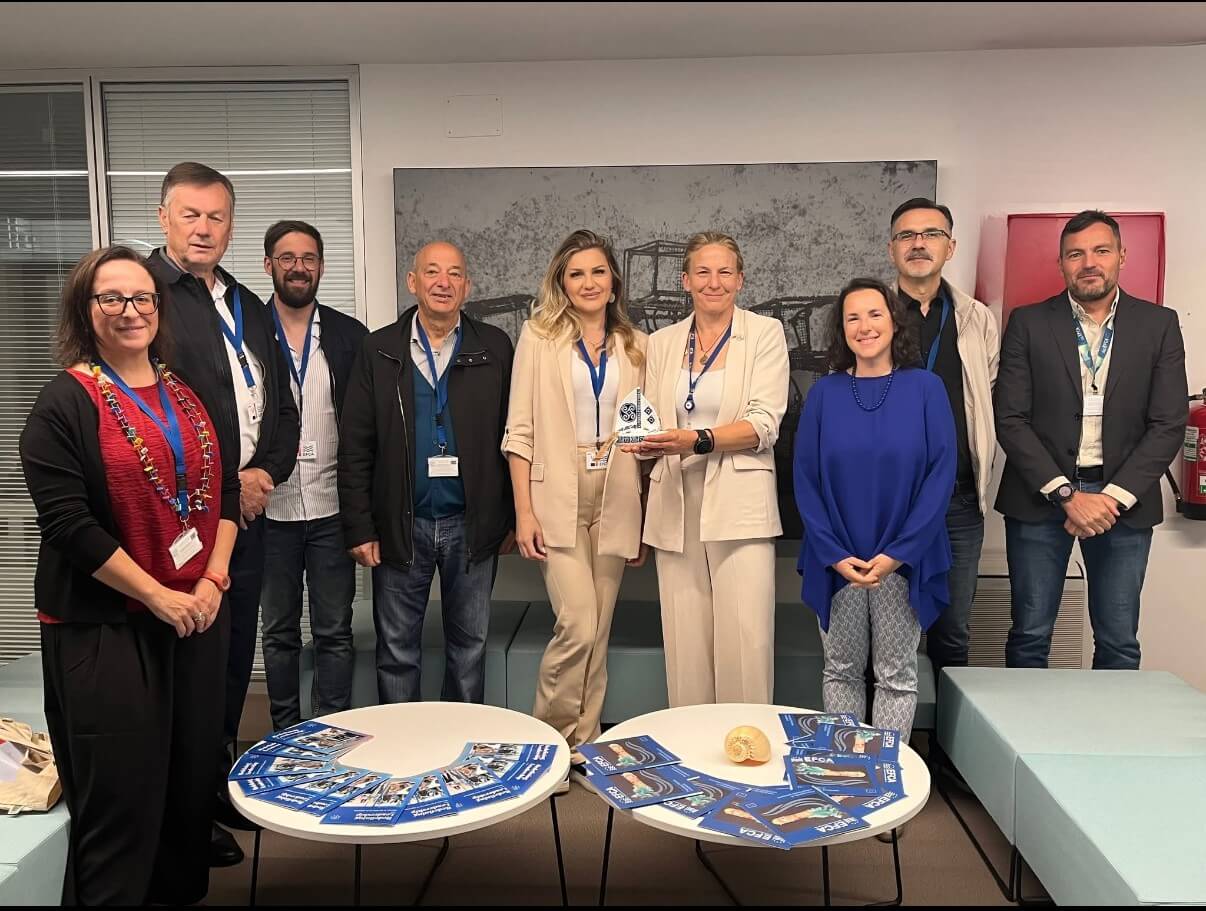
In the framework of our project in Montenegro, we recently organised a study visit to the European Fisheries Control Agency (EFCA) in Vigo, Spain which marked a significant milestone in aligning Montenegro’s fisheries inspection and control capacities with EU standards.
The visit provided a comprehensive overview of EFCA’s institutional role. Rather than substituting national authorities, EFCA acts as a vital coordination body, supporting Member States through Joint Deployment Plans (JDPs), risk-based planning, and harmonized inspection protocols.
📍 Bridging Strategy and Reality
The delegation from Montenegro explored the integration of digital tools such as IMS, VMS, ERS, and e-ISR, illustrating how technology drives operational consistency and seamless information exchange.
A field visit to Cangas further bridged the gap between high-level coordination and ground-level operations. By observing direct sales, labeling, and weighing procedures, the participants gained practical insights into how traceability and control requirements are applied at the local level.
🚀 Roadmap for Montenegro
The experience gained in Vigo is highly relevant for Montenegro’s path toward EU integration. The EFCA model offers a clear blueprint for future improvements in several strategic areas:
Enhanced Operational Planning: Adopting sophisticated inspection targeting and risk assessment.
Digital Modernization: Strengthening electronic reporting and interoperable systems.
Inter-institutional Cooperation: Fostering a more unified approach to maritime governance.
Market Integrity: Refining first-sale traceability and auction practices.
By observing these best practices firsthand, Montenegro continues to strengthen its capacity to ensure the sustainable management of its marine resources in line with the EU acquis.
FisheriesManagement Montenegro EUIntegration EFCA Vigo MaritimeControl Sustainability Traceability BlueEconomy
 Related news
Related news

We are excited to announce that Valeria Castro Chavez has joined the AGT Procurement Unit

GABON – “Projet d’Appui au Programme Graine (PAPG) ”,
EGYPT – WHEAT HARVEST MECHANIZATION CELEBRATION EVENT
Milestone Achievement: Successfully Closing the BINLI Project in Bangladesh! 🇧🇩🛡️

EU-funded project “Market surveillance capacity development” in the Turkish Cypriot community (TCc)
Northern part of Cyprus – EU Market Surveillance Capacity Development Project

🏅NEW AWARD IN BOLIVIA 🏅 “Adquisición e Instalación de Laboratorio de Contención BSL-3 ”

🏅NEW AWARD IN EGYPT🏅“Supply of agricultural machinery – Lot 4 – Seed drill machinery, Lot 5 – Soil working machinery, and Lot 7 – Workshop tools”

🏅NEW AWARD IN BOLIVIA🏅 – “Adquisición, distribución e instalación del equipo de laboratorio Diagnóstico CONALAB – Lote 01: Equipos de apoyo al Laboratorio y lote 04: Equipos de Laboratorio de alimentos, aguas y líquidos”

GAMBIA – “Procurement of Medical Equipment for the National Food and Drug Quality Control Lab in Brusubi (NFDQCL) – Lot 6: Laboratory furniture – ”

UGANDA – “Consultancy Services for Development of Commodity Value Chain, Platforms and Market Linkages for Lot I”
